
I was invited to moderate a masterclass with the Basque director Koldo Almandoz following the screening of his film Oreina [The Deer], organized by TransBorder Conversations in Helsinki. These notes on contemporary Basque cinema were written after filmmaker Erol Mintaş invited me to contribute a co-commissioned piece by Moving People and Images Journal and Critical Cinema Lab of Aalto University to provide readers with an overview of contemporary Basque cinema.
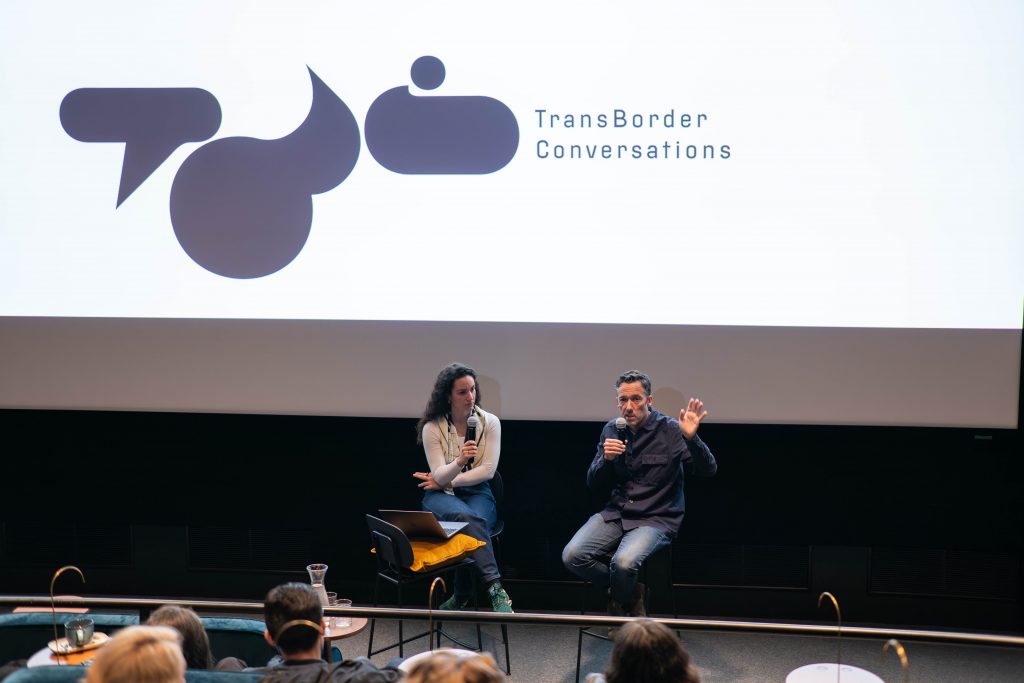
Photo by Samuel N. Boateng
In 1968, the documentary Ama Lur [Mother Earth] by Fernando Larruquert and Nestor Basterretxea marked the emergence of a new symbolic force in the Basque film industry, sparking hope amidst the seemingly insurmountable constraints posed by Franco’s dictatorship in the Basque Country. For this small corner of the earth, facing the Bay of Biscay and surrounded by the Pyrenees, the documentary’s unique language, shifting from the poetic to the anthropological, evoked the Basque country’s deep cultural roots long consigned to oblivion by the harsh years of dictatorship. Ama Lur is still considered an icon of cinema today and is widely regarded as the catalyst for the debate over ‘Basque cinema,’ which would persist for the next three decades, well into the 21st century.
Since its very inception, Basque cinema has always been inextricably linked with the complex question of Basque nationalism. Indeed, the seventh art is said to have emerged from the desire to spread eminently nationalist ideas and worldviews (De Pablo 2015), from Christian democracy to national liberation movements. This desire, spurred by the promise of radical social change, has driven the production of a wide range of film projects since the early 20th century. Cinema has served as the battleground for various debates on identity, marked by periods of hyper-ideologization (Guasch 2018), political intensity, and collective enthusiasm in search of a cultural renaissance. The desire for a freely exercised cinematic practice has placed the relationship between cinema and society at the heart of the longstanding debate over the ‘Basque national sphere’ (Macías 2010, 35).
The making and release of Ama Lur [Mother Earth] was not an isolated event, but part of a wave of artistic projects that emerged during the cultural revitalization of the late 1960s. After more than three decades of cultural, linguistic, and political repression under Spain’s fascist dictatorship, the Basque art scene found itself in a critical state. To remedy this situation, various cultural agents initiated projects across different artistic fields (Ansa 2019, Golvano 2016, Huércanos 2021, Gandara 2020). Artists like Jorge Oteiza, Agustín Ibarrola, and Eduardo Chillida; writers such as Gabriel Aresti and Arantxa Urretabizkaia; and musicians like Mikel Laboa and Xabier Lete organized collaborative efforts to recover cultural memory and set the stage for a broader debate on identity within the community.
With the end of the dictatorship in 1975 came the opportunity to envision a contemporary definition of Basque identity. This creative endeavor spanned all artistic disciplines, and in the case of cinema, the First Basque Film Festival in 1976 became a pivotal milestone. The event was organized by the Bilbao University Film Club and featured many cultural and intellectual figures, such as sculptor Jorge Oteiza, singer-songwriter Mikel Laboa, and historian Santos Zunzunegui, who summarized the 1976 Film Conference’s core objectives as follows (Beloki 2015, 178):
“1. To offer an overview of the films made in recent years in the Basque Country.
2. To show the current situation of Basque cinema, reflected in its virtual non-existence due both to the neglect with which its industrial component has been viewed over the years by the social classes that should have promoted it, and to the constant denial of the specific cultural needs of the Basque people.”
While they may seem anecdotal, these objectives laid the groundwork for establishing a national cinema in service of the Basque community’s needs: the defence of the Basque language, the creation of a film industry in said language, and the projection of future activity towards democratic measures and practices that represented Basque national issues and their aesthetic aspirations (Fernández 2020, 47). Throughout the 1970s, directors sought to create a cinema capable of representing the collective trauma inherited from the dictatorship. Noteworthy works emerged as the result of collaborations between various agents, such as Araba Films, the production company founded by Iñaki Núñez (Estado de excepción [State of Emergency], 1977; La última tierra [The Last Land], 1977; Saski Naski [Mishmash], 1979…), as well as filmmakers like Iñaki Aizpuru, Mikel Aldalur, and José María Zabalza (Aberri Eguna 78, [Day of the Basque Homeland 78], 1978; Konstituzio giroa [Constitutional Environment], 1979).
These films continued the discussion from the 1976 Film Conference on national cinema and contributed to the theorization of identity with the aim of generating a transformative cultural avant-garde (Macías 2010, 39). By the end of the 1970s, despite Spain’s fresh transition to democracy, the Basque film industry still faced many of the challenges it had endured. However, the economic and institutional support provided by the new Basque Government marked a significant shift (Fernández 2020, 53), offering Basque cinema new opportunities and avenues to explore. In the late 1970s and throughout the 1980s, the debate over the role cinema should play in the recovery of Basque collective identity intensified (Beloki 2015, 177), taking on broad dimensions among filmmakers, critics, and analysts.
Amid this conceptual framework, the film El proceso de Burgos [The Burgos Trial] premiered at the San Sebastian Film Festival in 1979, where it won the award the Pearl of the Cantabrian Sea for Best Spanish-language Film. Like Ama Lur [Mother earth] a decade earlier, the festival served to showcase films produced in the Basque Country to an international audience (Beloki 2015, 175). The film, shot in documentary format, is one of many works produced during this period by a new generation of young creators committed to social critique, focusing not only on the immediate realities of life in the Basque Country, but also on the recovery of historical memory: La fuga de Segovia [Segovia Prison Break] (Imanol Uribe, 1981), Agur Everest [Goodbye Everest] (Fernando Larruquert and Juan Ignacio Lorente, 1981), Tasio [Tasio] (Montxo Armendariz, 1984), Akelarre [Coven] (Pedro Olea, 1984), Ehun metro [100 Meters] (Alfonso Ungría, 1987), Ander eta Yul [Ander and Yul] (Ana Díez, 1989), Ke arteko Egunak [Days Between] (Antxon Ezeiza, 1989), etc.
After La Fuga de Segovia [Segovia prison break] in 1981, the consolidation of local democratic government made it possible to establish, for the first time in history, a well-structured Basque film industry, supported by a newly created institutional network. With the backing of new cultural policies, public subsidies, and the emerging EITB (Basque Public Radio and Television, 1982), the first film industry productions helped establish a professional field with unprecedented stability (Macías 2010, 41). Favourable institutional policies, the creation of production companies, and an active generation of diverse professionals all contributed to the consolidation of this first stage of Basque cinema. Yet this stability would be short lived.
As the 1980s progressed, ideological perspectives and institutional involvement changed. Saturation with politically committed cinema led to a fatigue that sparked interest in more varied topics. This change in perspective resulted in a notable decline in film production and weakened existing ties with public institutions (Fernández 2020, 59). By the end of the decade, the non-repayable public subsidies that had supported the production of such highly esteemed works in previous years had disappeared.
The paradigm shift of the 1980s, which came with the arrival of democracy to Spain, transformed the conceptual framework for interpreting identity and culture. Perspectives closer to postmodernism appear, proposing alternative interpretations of political conflict, traditional Basque life, industrial cities, sexual diversity, and gender roles. The definition of ‘Basque cinema’ began to explore new avenues for creative stimulation, and the generation of filmmakers in the 1990s expanded their horizons to include a wider range of interests. The early works of directors such as Juanma Bajo Ulloa, Alex de la Iglesia, Enrique Urbizu, Daniel Calparsoro, and Julio Medem, among others, played a key role in revitalising the film industry (Macías 2010, 43). As irreverent creators, they interrogate inherited traditions, traverse and hybridize genres, and pursue aesthetic strategies that operate disruptively.
This generation of filmmakers produced works such as Todo por la pasta [Anything for Bread] (1991) by Enrique Urbizu, a film that marked a turning point, on a par with Ama Lur [Mother Earth] (1968) and La Fuga de Segovia [Segovia Prison Break] (1981) from earlier decades (Roldán 2015, 135). Urbizu’s film stands out for its treatment of the characters, its ironic critique of the political backdrop, and its portrayal of Bilbao during those years. Juanma Bajo Ulloa contributed to this eclectic activity with some of the most promising films of the 1990s, such as El reino de Víctor [The Kingdom of Victor] (1989), Alas de mariposa [Butterfly Wings] (Golden Shell at the San Sebastián Film Festival, 1991) and Akixo [Akixo] (1989), where an atmosphere between the sinister and a children’s story can be appreciated. Julio Medem’s feature film Vacas [Cows] (1992) was a visual and emotional powerhouse, recounting the built-up tension between two families in the period between the Carlist Wars (1833-76) and the Civil War (1936-39). Alex de la Iglesia’s work stands out with his feature-length Acción mutante [Mutant Action] (1993) and short films like Mamá [Mum] (1988) and Mirindas asesinas [Killer Mirindas] (1991), works that lean toward science fiction and absurd comedy. Daniel Calparsoro is also worth a mention with his short WC (1992) and his feature Salto al vacío [Jump into the Void] (1995), which explore industrial cities, violence, and despair.
These works reveal a fascination with violence, the use of comic book techniques, high-impact imagery, a strong emphasis on music, and a mastery of technical resources (Santamarina 2015; Roldán 2015). This was a generation of filmmakers with a strong international presence. Some of their works premiered at international film festivals, such as Alex de la Iglesia’s El día de la bestia [The Day of the Beast] at the Venice Film Festival in 1995 and Tierra [Land] by Medem and Pasajes [Passages] by Galparsoro at Cannes in 1996. The contributions of this generation are evident in Basque cinema and the broader Spanish film scene, signalling a significant change in filmmaking practices. Their works paved the way for a wider variety of films, incorporating diverse visual resources and content, and working with genres such as thrillers, comedies, and science fiction.
Despite the promising projects of the 1990s, by the turn of the millennium, directors like Medem, De la Iglesia, and Urbizu pursued projects elsewhere. This shift away from the Basque Country hindered the development of a local film industry that could support emerging talent cultivated in Basque film schools during this period. In the late 1990s, the Basque Government’s Department of Culture, together with the film unit of the San Sebastián City Council (Donostia Kultura), launched an initiative aimed at promoting short films locally and internationally; the program is called Kimuak, which stands for ‘sprouts’ in the Basque language (Lazkano et al. 2015, 223). By the early 2000s, the program, currently managed by the Basque Film Archive, had gained traction largely through the screening of short films at various film and television festivals.
Over the course of two decades, the program has proven to be a prolific platform for promoting young talent in the Basque Country, establishing itself as an exemplar of crafting and implementing public policy in the arts, particularly in the field of cinema. Several directors featured in Kimuak would eventually produce feature films (Fernández 2020, 66) and have testified to the importance of the program in the subsequent progress of their careers: Koldo Almandoz, Asier Altuna, Luis Berdejo, Borja Cobeaga, María Elorza, Maider Fernández, Raúl de la Fuente, Mikel Gurrea, Telmo Esnal, Aitor Arregi, Jon Garaño, J. M. Goenaga, Galder Gaztelurrutia, Ione Hernández, Víctor Iriarte, Pablo Malo, Josu Martínez, Aritz Moreno, Maider Oleaga, Mikel Rueda, Arantza Santesteban, Oskar Santos, Maru Solores, Koldo Serra, David Pérez Sañudo, Paul Urkijo, Estibaliz Urresolam, and Isabel Herguera, among others.
The experimentation undertaken in short films featured in the Kimuak program has blossomed into more complex projects, as demonstrated by the careers of filmmakers like Koldo Almandoz (Oreina [The Deer], 2018), Estibaliz Urresola (20,000 especies de abejas [20,000 Species of Bees], 2023), Arantza Santesteban (918 Gau [918 Nights], 2021), and the team of Aitor Arregi, Joan Garaño, and J. M. Goenaga (Loreak [Flowers], 2014; Handia [The Giant], 2017; La trinchera infinita [The Endless Trench], 2019). Technical experimentation explores a wide variety of aesthetic languages in the film proposals of the new century. These works range from mythological narratives (Paul Urkijo’s Errementari [The Blacksmith and the Devil], 2017, and Irati [Irati], 2022) to intimate explorations of memory and grief (as seen in Loreak [Flowers], 2014) to more essayistic takes on filmmaking (like Koldo Almandoz’s Sîpo Phantasma, 2016). These works portray characters that defy stereotypes (Koldo Almandoz in Oreina [The Deer], 2018), moving beyond the obvious whilst maintaining a perspective anchored on local realities.

Photo by Samuel N. Boateng
Precisely because it departs from entrenched stereotypes, the film served as a particularly pertinent case study for the masterclass held in Helsinki. Oreina [The Deer] follows Khalil, a young man marked by rootlessness who inhabits the city’s peripheral zones, where industrial areas converge with the river and marshlands. Almandoz examines these natural and urban borderlands as liminal spaces in which the protagonists’ sense of individual and social identity predominates as they navigate between attachment and the absence of belonging (Doxandabaratz 2024, 8). The director thus offers a critique of increasingly individualistic and homogenized contemporary life while questioning essentialist constructions of Basque identity. These liminal contexts demonstrate the capacity of subjects to articulate identities that exceed fixed definitions, underscoring the Gipuzkoan director’s sustained engagement with contemporary Basque social reality.
Without a doubt, the cinematic landscape shaped in the first decades of this century fearlessly explores a diversity of narratives, foregrounding the myriads of possible iterations of the Basque cultural identity of today. Far from offering a single definition of what it means to be Basque, its cinema proposes an exploration of the interstices of contemporary society, seeking a more liminal space to approach the limits of local identity. The goals outlined by Zunzunegui in the 1980s resonate in the cinematic practices of the present, with a wide array of films in Basque that showcase a plurality of styles and themes that shift away from a monolithic interpretation of identity toward an avant-garde and transformative aesthetic.
Nerea Mandiola is a lecturer and researcher specializing in contemporary Basque culture. She is currently carrying out a research project on contemporary thought, art, and literature in the Basque context (1968–1988) within the doctoral program in Artistic, Literary, and Cultural Studies at the Autonomous University of Madrid. She holds a research grant from the Bilbao Fine Arts Museum (2024-2025). She has held teaching appointments at the University of Helsinki, Yale University, and the University of Mondragón. Her research interests include cultural studies, identity formation, memory studies, minority literatures, collective trauma, and conflict-laden contexts.
Bibliography
Ansa, Elixabete. 2019. Mayo del 68 vasco. Oteiza y la cultura política de los sesenta. Pamiela. Iruñea.
Beloki, Maialen. 2015. “El cine vasco en el Festival de San Sebastián.” In Cine Vasco: Tres Generaciones de Cineastas. Basque Film Archive Foundation. Donostia.
Doxandabaratz, Beñat. 2024. “On shifting sands: Exploring the role of the third space in new Basque cinema’s Pikadero and Oreina”. In International Journal of Iberian Studies 37, 1: 7-25. DOI: https://doi.org/10.1386/ijis_00119_1
Fernández, Joxean. 2020. Cinema. The Etxepare Basque Institute. Donostia.
Gandara, Ane. 2020. Euskal kultura berreraiki zen garaia: 60ak eta 70ak. University of the Basque Country.
Golvano, Fernando. 2016. 1966 Gaur konstelazioak 2016. San Telmo Museum. Donostia.
Guasch, Anna María. 2018. Arte e ideología en el País Vasco 1940-1980. Akal. Madrid.
Huércanos, Juan Pablo. 2021. Grupo GAUR. Arte y construcción. Jorge Oteiza Museum and Kutxa Foundation.
Lazkano, Iñaki, Ainhoa Fernández, and Nekane Zubiaur. 2015. “Kimuak, escaparate del cine vasco.” In Cine vasco: tres generaciones de cineastas. Basque Film Archive Foundation. Donostia.
De Pablo, Santiago. 2015. “La nación vasca en la pantalla: cine e identidad nacional en el País Vasco en el siglo XX.” In Cine vasco: tres generaciones de cineastas. Basque Film Archive Foundation. Donostia.
Roldán, Carlos. 2015. “Década de los noventa, la segunda generación de cineastas vascos y su brillante legado.” In Cine vasco: tres generaciones de cineastas. Basque Film Archive Foundation. Donostia.
Santamarina, Antonio. 2015. “Nuevos tiempos, nuevas formas. Búsquedas expresivas en los cineastas vascos de los noventa.” In Cine vasco: tres generaciones de cineastas. Basque Film Archive Foundation. Donostia.

This article was com-missioned by the Critical Cinema Lab and the Moving People and Images Journal (the MPI Journal)


